



Preschool children benefit from structured learning tools. Platforms like Toddlers App help childcare centers organize responsibilities, routines, and classroom activities effectively. A job chart introduces simple tasks that children can complete independently. Centers that use job charts teach accountability social skills and confidence. This guide explains how to implement preschool job charts effectively and provides ideas for age appropriate roles.
Why Job Charts Are Important
Job charts provide structure and clear expectations. Children learn to contribute to the classroom environment. Completing tasks reinforces pride and self esteem. Charts also support cooperation and teamwork.
Key Benefits
- Teaches personal responsibility
- Encourages teamwork and cooperation
- Builds confidence and self esteem
- Develops routine and consistency
Job charts create positive habits that last beyond preschool.
Getting Started with a Job Chart
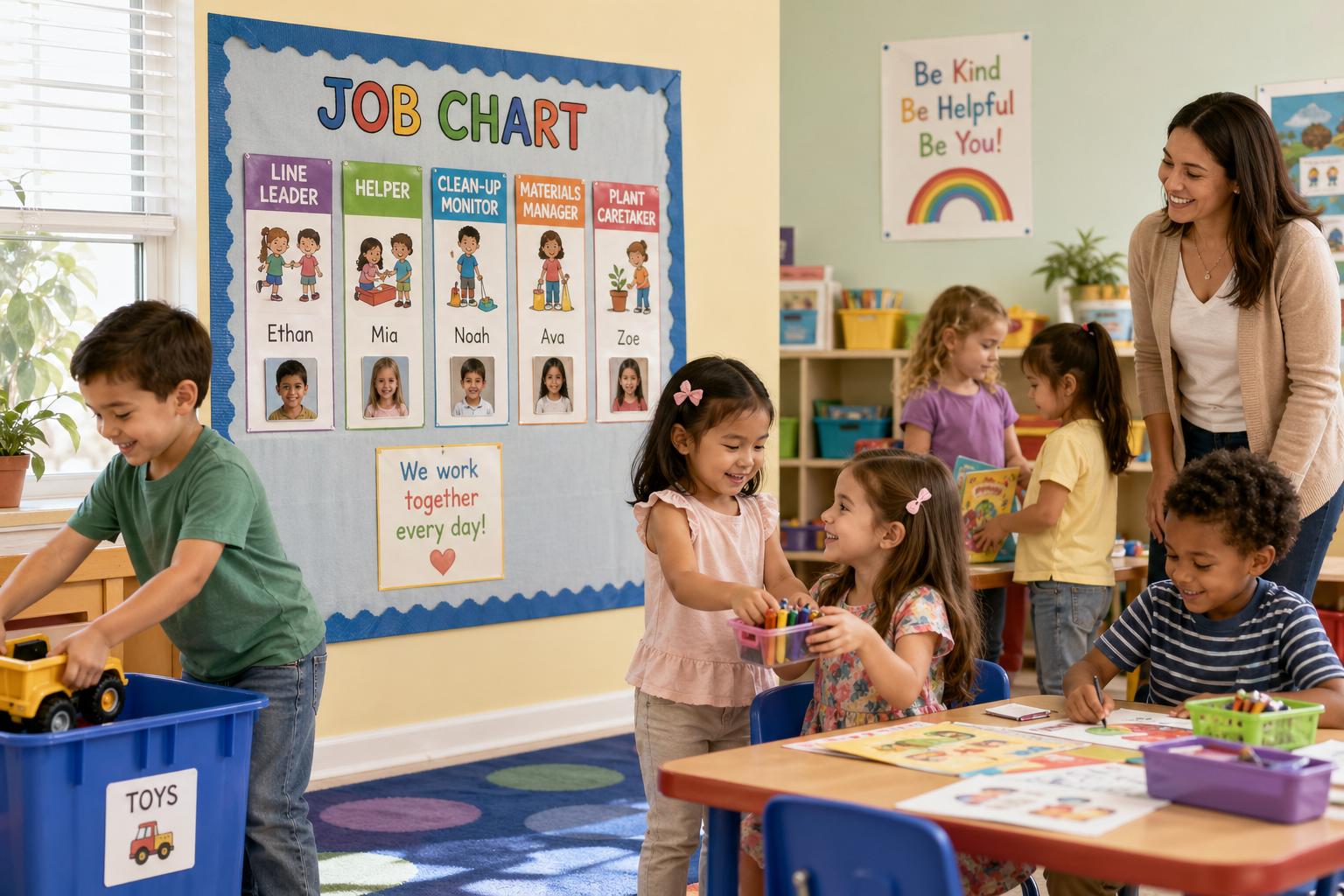
Introducing a chart requires planning. Choose simple tasks that are achievable for preschoolers. Use visuals and labels to guide children. Make sure roles rotate to give everyone a chance to participate.
Steps to Introduce a Job Chart
- Decide on tasks appropriate for the age group
- Create a visual chart with names and pictures
- Explain each task clearly to the children
- Establish a rotation schedule
Proper introduction ensures engagement and understanding.
Examples of Preschool Jobs
Jobs should be simple safe and meaningful. Tasks should allow children to contribute to the classroom community.
Job Ideas
- Line leader or door helper
- Table cleaner or snack helper
- Toy organizer or book helper
- Plant waterer or garden helper
- Calendar helper or weather reporter
Variety encourages participation and skill development.
Visual Job Chart Design
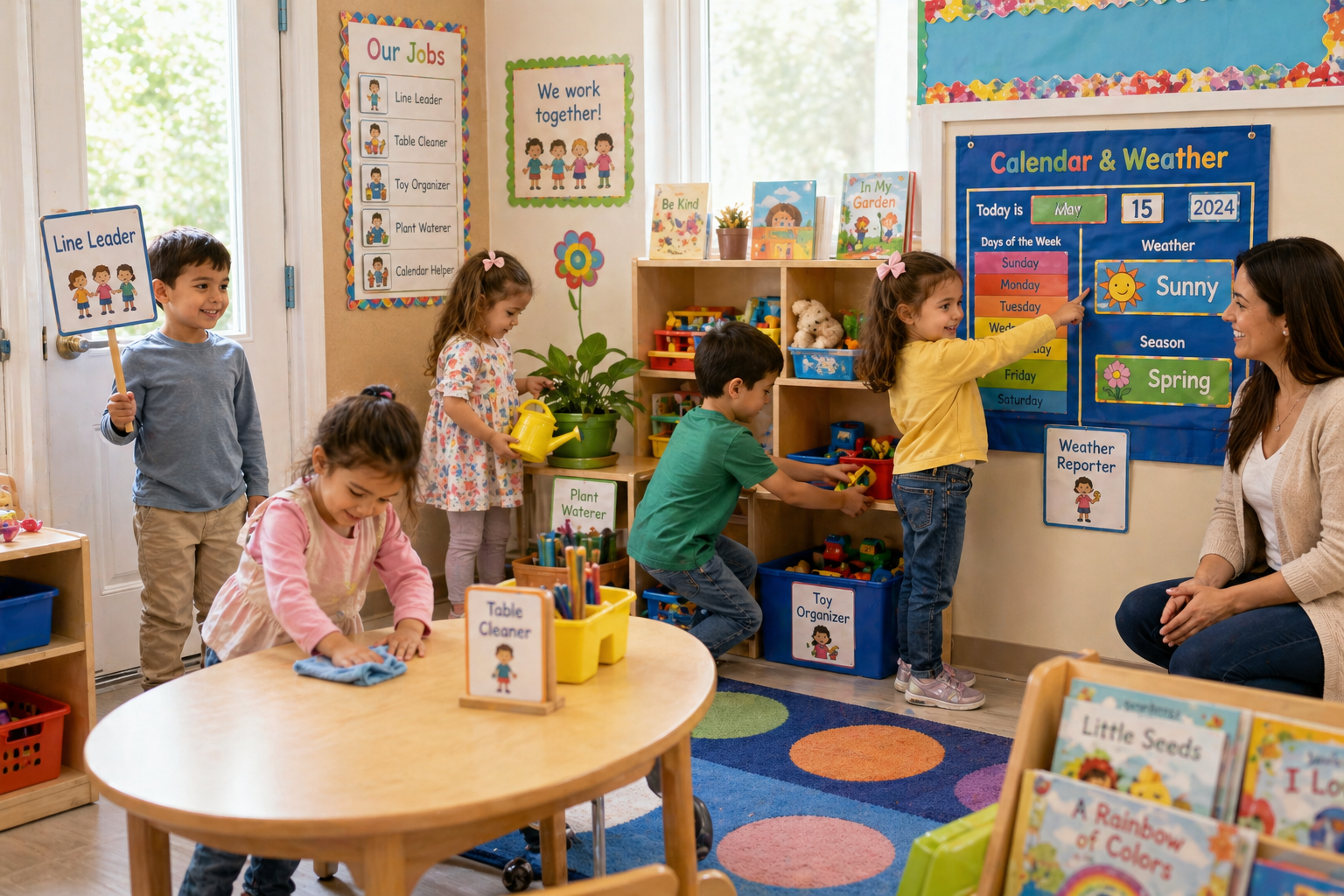
Visuals help children understand expectations. Pictures or symbols make tasks easy to follow. Charts can be displayed where everyone can see.
Design Tips
- Use bright clear images
- Include child names or photos
- Keep chart at child height
- Rotate tasks regularly
A clear design supports independence and consistency.
Teaching Children to Complete Jobs
Modeling and guidance are essential. Children need to understand how to perform each task correctly. Positive reinforcement encourages effort and consistency.
Teaching Strategies
- Demonstrate tasks step by step
- Use simple instructions and repeat if necessary
- Offer praise for completion
- Encourage children to help each other
Guided practice builds competence and confidence.
Rotating Responsibilities
Rotating roles ensures all children experience different tasks. Rotation prevents boredom and encourages new skill development.
Rotation Ideas
- Weekly rotation of all roles
- Pair children for cooperative jobs
- Adjust tasks based on skill level
- Track completed tasks visually on the chart
Rotation teaches fairness and adaptability.
Positive Reinforcement Techniques
Recognition motivates children to complete tasks. Reinforcement should focus on effort consistency and teamwork. Rewards can be simple and meaningful.
Reinforcement Ideas
- Praise and encouragement from staff
- Stickers or tokens for completed jobs
- Group acknowledgment at circle time
- Allow children to celebrate accomplishments
Positive reinforcement builds confidence and motivation.
Integrating Job Charts into Daily Routine
Consistency makes job charts effective. Incorporate tasks naturally into the daily schedule. Children should know when and how to complete their responsibilities.
Routine Integration Tips
- Assign morning and afternoon jobs
- Include job completion time in schedule
- Review chart daily with the class
- Use transition times to complete tasks
Routine integration ensures children develop responsibility habits.
Monitoring and Adjusting
Observe children to ensure tasks are appropriate and effective. Adjust roles and expectations as needed. Feedback helps improve the job chart system.
Monitoring Tips
- Track participation and completion
- Note areas where children need support
- Update tasks to match growth and skill
- Celebrate improvements and successes
Monitoring encourages consistent progress and engagement.
Involving Families in Responsibility
Sharing job chart progress with families reinforces learning. Parents can support responsibility at home. Communication builds consistency between school and home.
Family Engagement Ideas
- Share weekly updates or photos
- Suggest home responsibilities aligned with classroom jobs
- Encourage discussion about completed tasks
- Invite parents to participate in special projects
Family involvement strengthens skill development.

Using Job Charts for Team Building
Job charts foster teamwork and cooperation. Children learn to help each other complete tasks. Collaboration teaches empathy and social skills.
Team Building Strategies
- Pair children for shared responsibilities
- Encourage children to remind each other of tasks
- Celebrate group accomplishments
- Discuss feelings and experiences after task
Team building reinforces community and social development
Benefits Beyond Preschool
Job charts teach skills that extend beyond the classroom. Responsibility cooperation and organization benefit children in home and school settings. Early exposure prepares children for future academic and social challenges.
Long Term Advantages
- Strong work habits
- Confidence in completing tasks
- Ability to cooperate and contribute
- Positive approach to challenges
Job charts build foundational life skills.
Conclusion
Preschool job charts provide children with structured opportunities to learn responsibility. Tasks should be simple meaningful and age appropriate. Visual charts rotation positive reinforcement and family involvement support successful implementation. Job charts develop confidence cooperation and independence while creating a positive classroom culture.
Early responsibility training prepares children for future success academically socially and personally. Consistent use of a preschool job chart enhances learning experiences and builds lifelong habits.