




Child care routines give children stability at their young ages. Child care routines help children be able to control their behavior. Child care centers with child care routines offer children an effective environment for learning social-emotional skills. This article will show child care routines on how to manage child behavior effectively. Explore ToddlersApp childcare solution to simplify your daycare operations.
Why Routines Matter
Routines provide children a feeling of security. When children feel what they need to do next, they feel secure and relaxed.
LAMBDASTEPS
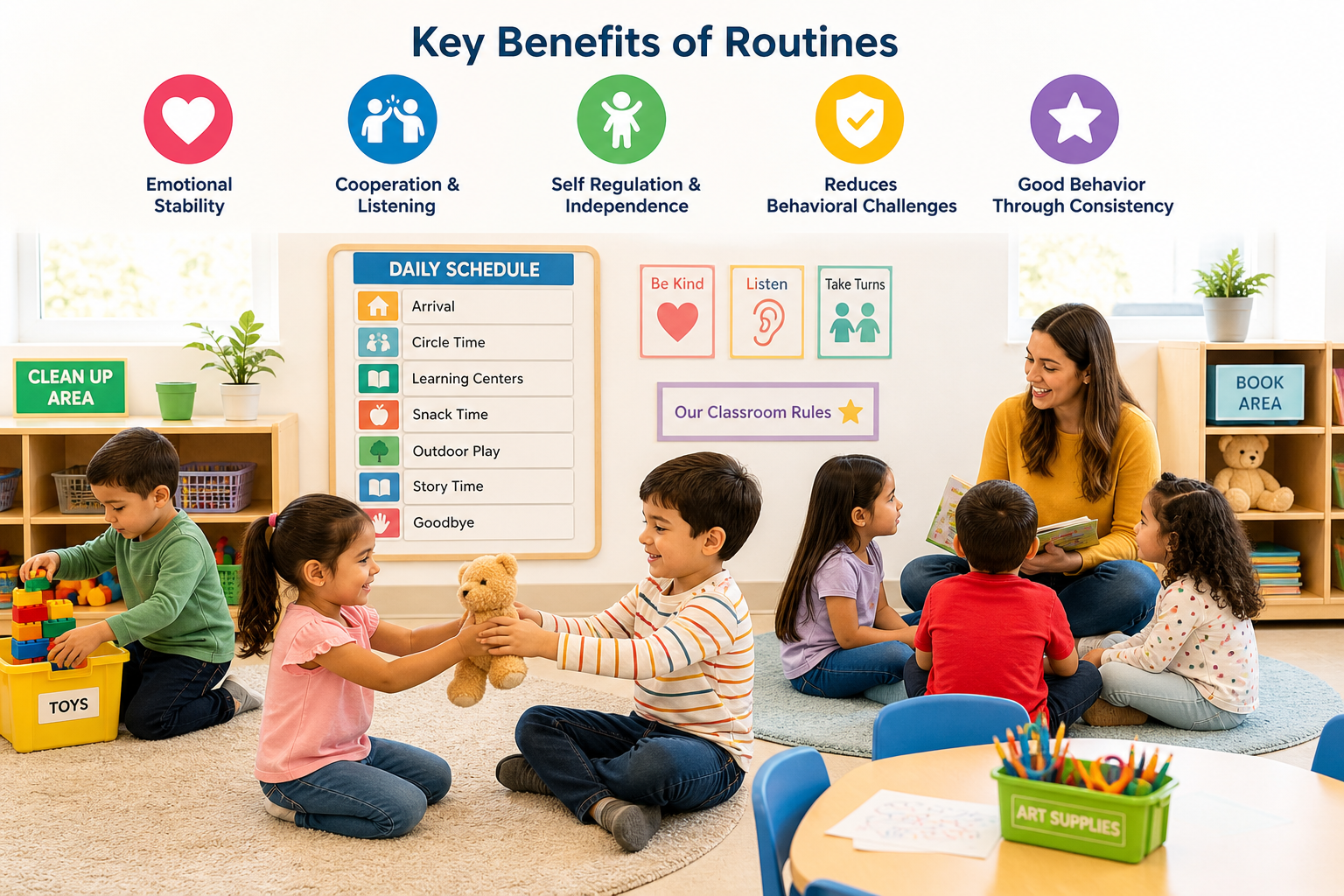
Key Benefits
- Encourages emotional stability
- Promotes cooperation and listening
- Encourages self regulation and independence
- Reduces behavioral challenges
Consistency helps to inculcate good behavior through routine.
Organizing Your Time
Children are expected to follow a daily routine. Their activities should be planned with a proper mix of active play and quiet education centers.
Procedures to Generate a Schedule
- Outline arrival and departure procedures
- Plan learning activities with structure as well as opportunities for play
- Add time for snack/meal breaks
- Schedule time for outdoor activities and rest
Daily schedules offer a structured platform which helps regulate and monitor activities.
Morning Routines
Morning routines are important in enabling children to begin the day on a positive note. Established arrival procedures help to reduce tension and foster cooperation.
Morning Routine Ideas
- Welcoming each child at the entrance
- Practicing self-discipline in daily routine
- Beginning the day with a communal activity
- Discuss Daily Schedule with Children
Organized mornings establish the pattern for positive behavior.
Learning Center Rotations
The practice of rotating children around learning stations will increase engagement and decrease conflict. Setting clear expectations in each station promotes positive interactions.
Center Management Tips
- Divide small groups into each center
- Discuss rules concerning materials and sharing
- Rotate centers regularly
- Give advice in case of conflict
Organized center time allows for the practice of responsibility and teamwork.
Snacking and Eating Regimens
Mealtimes promote behaviors for manners, patience, and social skills. Routines promote self-help skills and cooperation.
Meal Strategies
- Children wash their hands before eating
- Promoting the use of utensils
- Usage of "Waiting Turns" – instruction on waiting turns
- Assign simple jobs like table setting or cleaning
Meal routines can contribute to behavioral expectations because routine eating times promote positive habits.
Outdoor Play & Movement
Exercise promotes healthy growth and prevents restlessness. Outdoor routines afford opportunities for learning turn-taking and obedience.
Outdoor Play Tips
- Setting boundaries and safety guidelines
- Use equipment in a fair rotation
- Promote cooperative games
- Set aside time for cooling down/reflection
Organized outdoor activities lead to developing self-control and teamwork.
Nap and Quiet Time
Quiet time provides a time for rest and rejuvenation for children. It provides signals for children to calm down and relax at certain times.
Nap Routine Tips
- Provide consistent timing each day
- Wind down kids with quiet before sleeping
- Provide comfort items if required
- Respect differences in sleep needs
Quiet routines help lower irritable behaviors and promote better behavior for the rest of the day.
Transition Times
Transitions can be difficult for young children. Well-understood transitions help prevent frustration and puzzlement.
Transitioning Tips
- Provide warnings before activity changes
- Use songs or signals for transitions
- Give instructions for new activity
- Admire children for successful transitions
Transition management is an important factor in ensuring cooperation rather than conflict.
Behavioral Expectations and Reinforcement
Routines create a systematic approach in teaching behavioral guidelines. Rewarding positively encourages desired behavior.
Reinforcement Ideas
- Thank children for following routine
- Provide simple reward for teamwork and patience
- Demonstrate behavioral expectations through visual cues
- Act out correct behavior
Consistency of reinforcement helps teach rules and expectations to children.
Engaging Staff and Families
It helps if there is consistency between the staff in the facility and in the home. It supports behavioral improvement because children receive consistent messages.
Staff and Family Strategies
- Regularly train employees to maintain routines
- Communicate routines and expectations with families
- Encourage reinforcement of similar schedules at home
- Share progress and successes frequently
Partnerships provide an encouraging atmosphere for growth in behavior.

Monitoring & Adjusting Routines
Observation of how children react to a routine enables modifications to be made. This ensures that routines work while still being developmentally sound.
Monitoring Tips
- Record changes in behavior & participation
- Adjust activities or timing if needed
- Seek staff views on efficiency of routine
Regular review helps reinforce routines to continue to achieve behavioral objectives.
Creating a Community of Practice
Routines offer opportunities for practicing what has been learned. Activities like counting, cleaning, sorting, and teamwork can be naturally embedded.
Integration Ideas
- Practice counting during cleanup time
- Facilitate sorting of materials by color or size
- Include language development at snack time
- Teach rules and cooperation skills through outdoor games
Routines help with skill building and behavioral demonstration simultaneously.
Conclusion
Daily routines at daycare centers are an essential tool that helps enhance the behavior of the child. A well-planned schedule helps the child understand the requirements of the professionals and adjust accordingly, creating a positive environment. Daily routines like morning routines, learning centers, mealtimes, outdoor activities, and transitions are beneficial for the child. Effective routines teach responsibility, self-control, and cooperation and encourage social-emotional development. Children flourish when they understand expectations and feel safe.