




Training nursery staff to handle toddler behavior positively is one of the most important parts of running a successful early childhood center. Toddlers are naturally expressive, emotional, and still learning how to communicate their needs. With the right guidance, caregivers can turn challenging moments into meaningful learning opportunities.
In this guide, we’ll explore practical ways to train nursery staff so they can respond to toddler behavior with patience, confidence, and positive strategies.
Why Positive Behavior Handling Matters in Nurseries
Toddlers often communicate through behavior rather than words. Crying, tantrums, resistance, or hitting are usually signs of unmet needs such as hunger, tiredness, or frustration.
When staff respond positively instead of reactively, children learn:
- Emotional regulation
- Trust and security
- Social behavior boundaries
- Healthy communication skills
Well-trained staff create a calm environment where children feel understood and supported, which improves overall classroom behavior.
Core Principles of Positive Behavior Management
1. Understanding Child Development
Nursery staff must understand that toddler behavior is developmentally normal. At this stage, children are still learning self-control and emotional expression.
Training should include:
- Age-appropriate behavior expectations
- Emotional development stages
- Communication limitations of toddlers
This helps staff avoid unrealistic expectations and respond with empathy.
2. Encouraging Positive Reinforcement
Instead of focusing on punishment, staff should be trained to reinforce good behavior.
Examples include:
- Praising sharing and kindness
- Using positive words like “Good job waiting your turn”
- Rewarding calm behavior with attention and encouragement
Positive reinforcement builds confidence and reduces negative behavior over time.
3. Using Calm and Gentle Communication
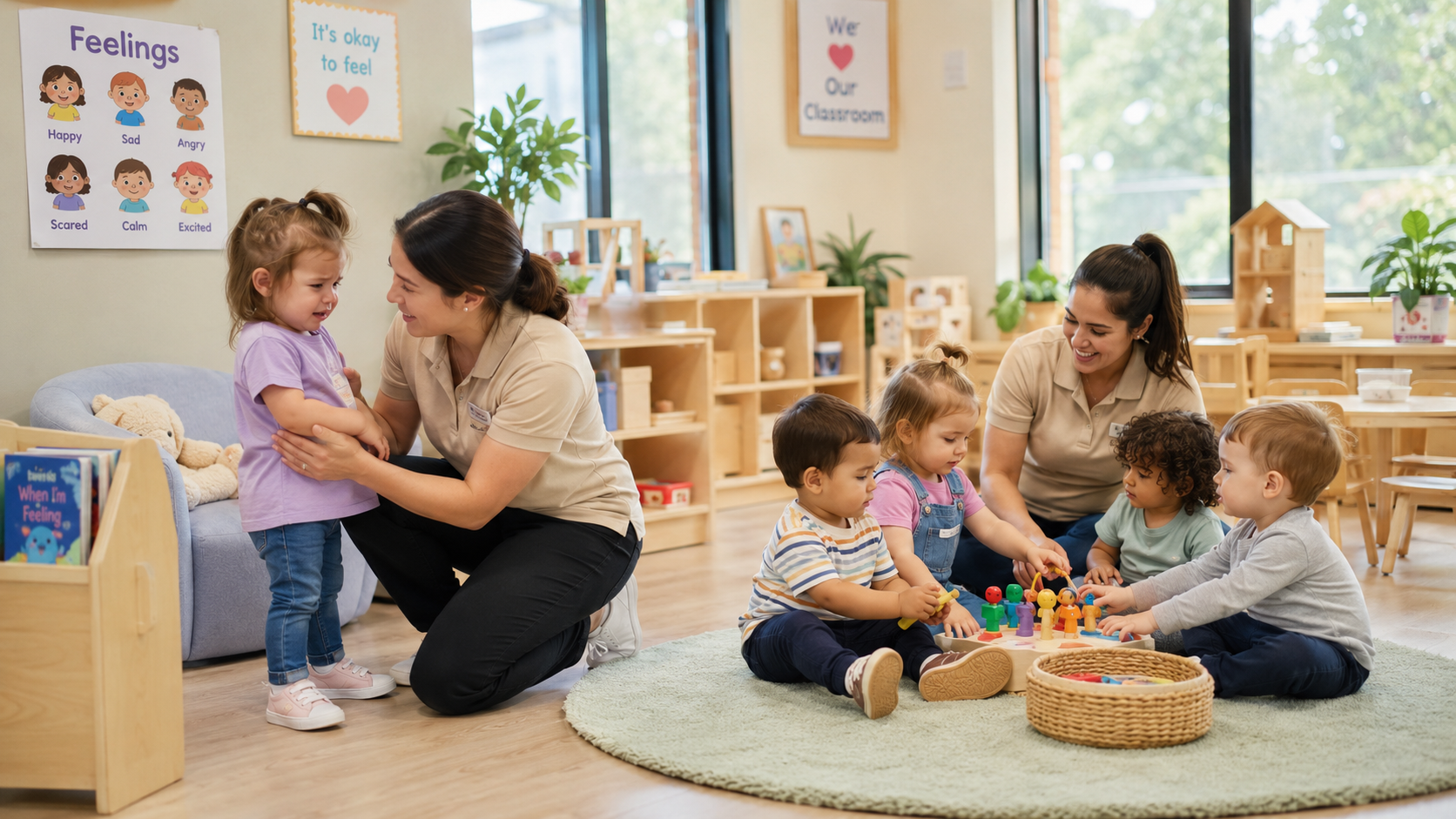
Tone of voice and body language matter greatly when handling toddlers.
Staff should learn to:
- Speak in a soft, calm voice
- Use simple and clear instructions
- Kneel to the child’s eye level
- Avoid shouting or harsh reactions
This approach helps de-escalate emotional situations quickly.
Practical Training Strategies for Nursery Staff
1. Role-Playing Real Scenarios
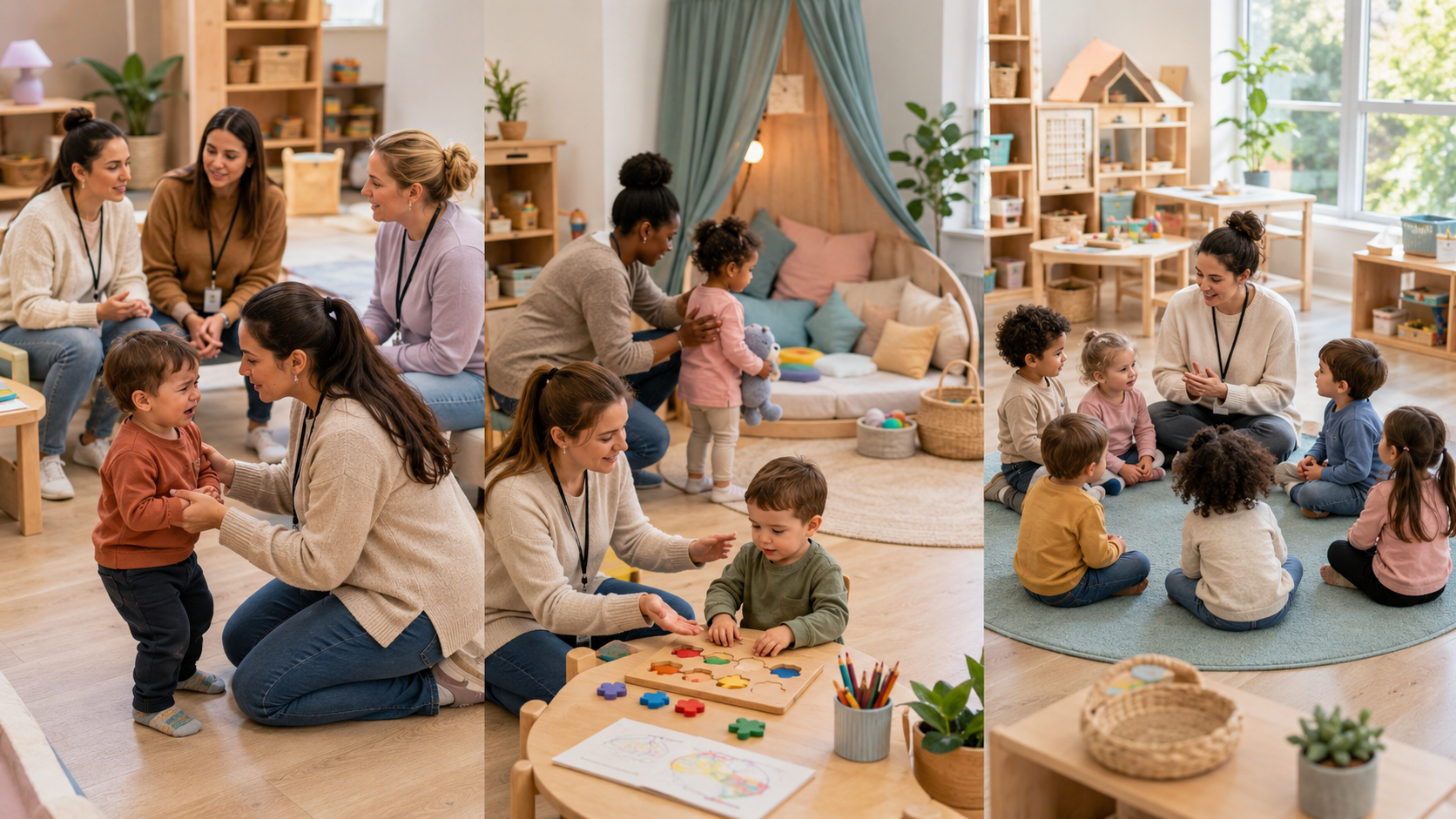
Training sessions should include real-life behavior situations such as tantrums, sharing conflicts, or refusal to follow instructions.
Role-playing helps staff:
- Practice responses safely
- Build confidence
- Learn teamwork in handling difficult situations
2. Teaching Redirection Techniques
Instead of saying “no” repeatedly, staff should redirect children’s attention.
For example:
- If a child is throwing toys, redirect them to a puzzle or drawing activity
- If a child is upset, guide them to a calm corner
Redirection helps manage behavior without conflict.
3. Creating a Consistent Routine
Consistency is key in toddler classrooms. Staff should be trained to follow structured routines so children feel secure.
A stable routine helps:
- Reduce anxiety
- Prevent behavioral issues
Improve cooperation
Handling Challenging Behaviors Positively
1. Tantrums and Emotional Outbursts
Staff should remain calm and avoid reacting emotionally. Instead:
- Stay close but give space
- Acknowledge feelings (“I see you are upset”)
- Wait for the child to calm down before talking
2. Aggressive Behavior
When toddlers hit or bite:
- Separate them gently from the situation
- Use simple language like “We don’t hit”
- Redirect attention to safe behavior
3. Refusal to Follow Instructions
Instead of forcing compliance:
- Offer choices (“Do you want to clean up blocks or books first?”)
- Break instructions into simple steps
- Use encouragement instead of pressure
Building Emotional Skills in Staff
1. Stress Management Training
Nursery work can be demanding. Staff should be trained in:
- Breathing techniques
- Short breaks when needed
- Team support systems
2. Empathy Development
Empathy helps staff understand what a child is feeling rather than just reacting to behavior. Training should include:
- Perspective-taking exercises
- Case studies of child behavior
- Reflective discussions
Using Technology to Support Staff Training
Modern childcare centers can use digital tools to improve staff training and communication. Platforms like Toddlers App help nurseries manage learning activities, behavior tracking, and communication with parents more effectively.
With structured systems in place, staff can focus more on children rather than administrative tasks.
Conclusion
Training nursery staff to handle toddler behavior positively is essential for creating a safe, nurturing, and effective learning environment. When caregivers understand child development, use positive reinforcement, and stay calm in challenging situations, children thrive emotionally and socially.
A well-trained team not only reduces behavioral challenges but also builds strong foundations for lifelong learning and confidence in young children.