




A well-structured daily routine is one of the most important foundations of a successful nursery environment. Toddlers feel more secure, confident, and cooperative when they know what to expect throughout the day. Consistent routines also support emotional development, learning readiness, and positive behavior.
In this article, we explore how effective daily routines help toddlers thrive in a nursery setting and how educators can design them for better learning outcomes.
Why Daily Routines Are Important for Toddlers
Toddlers are still developing their sense of time, structure, and independence. A predictable routine helps them feel safe and reduces anxiety.
Key benefits of daily routines include:
- Builds emotional security and stability
- Improves behavior and reduces tantrums
- Encourages independence and responsibility
- Supports smoother transitions between activities
- Enhances learning and focus
When children know what comes next, they feel more in control and confident.
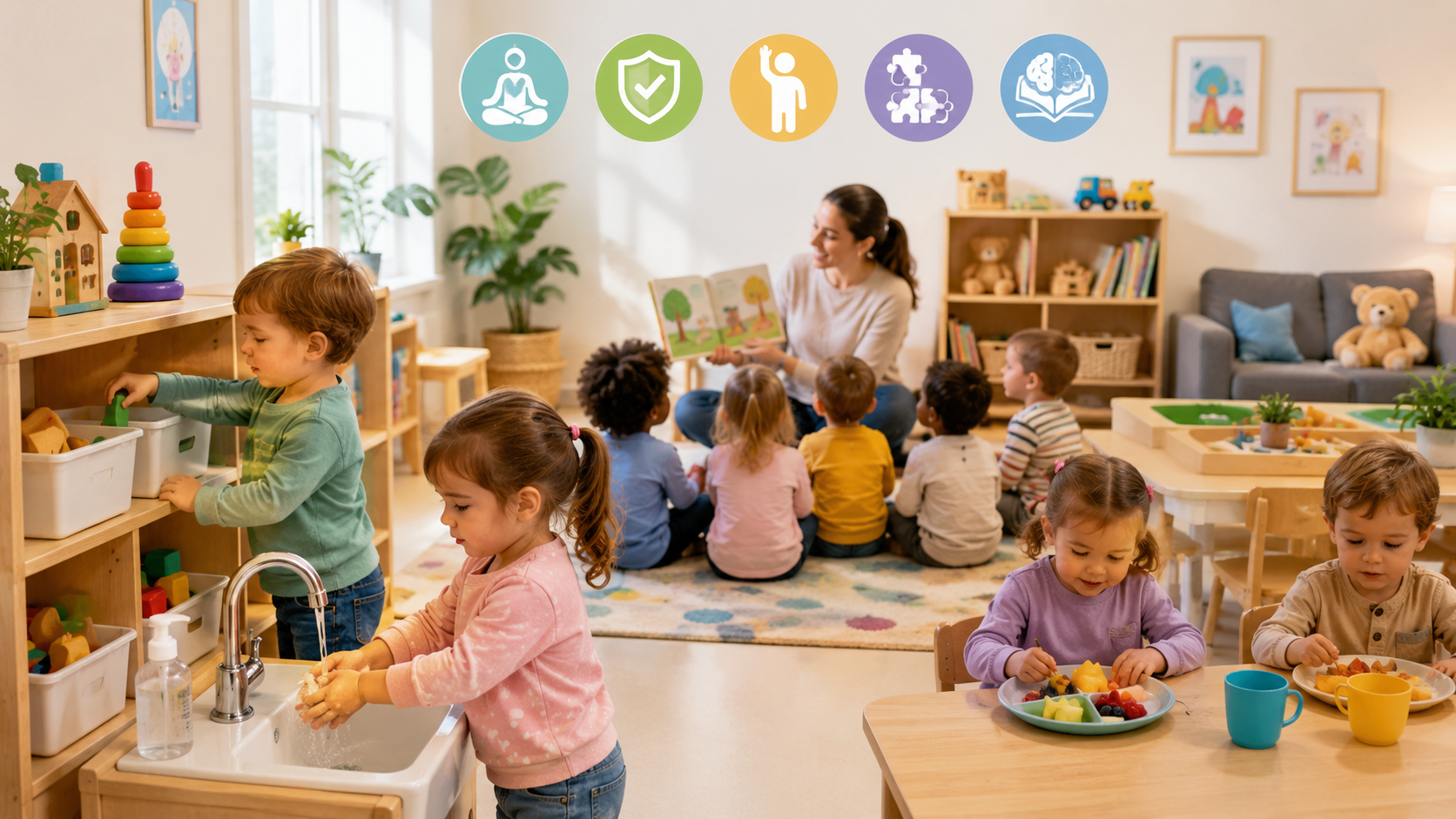
Morning Arrival Routine
1. Warm Welcome and Separation Ease
The first moments of the day set the tone for everything that follows. A calm and friendly welcome helps toddlers transition from home to nursery.
Best practices include:
- Greeting each child by name
- Allowing a comfort item from home
- Gentle separation from parents
- Engaging children in a welcome activity
A positive start reduces separation anxiety and builds trust.
2. Free Play on Arrival
After settling in, toddlers benefit from unstructured free play.
This helps them:
- Explore materials at their own pace
- Socialize with peers naturally
- Transition smoothly into the nursery environment
Circle Time and Group Activities
Circle time is an essential part of the daily routine that promotes communication and social skills.
1. Morning Songs and Greetings
Simple songs and group greetings help children:
- Recognize peers and teachers
- Develop language skills
- Feel included in the group
2. Storytelling Sessions
Short stories improve listening and imagination.
Teachers can:
- Use picture books
- Ask simple questions
- Encourage participation
Learning and Activity Time
1. Structured Learning Activities
This is the core educational part of the day, where toddlers engage in guided learning.
Activities may include:
- Arts and crafts
- Sensory play
- Early math and language games
- Outdoor exploration
These activities build cognitive and motor skills.
2. Rotational Activity Stations
Rotating small group activities helps maintain interest and focus.
Children can move between:
- Creative art corners
- Building blocks
- Reading areas
- Sensory tables
Snack and Meal Routines
1. Healthy Eating Schedule
Regular meal times help toddlers develop healthy eating habits.
Best practices:
- Fixed snack and lunch times
- Encouraging self-feeding
- Teaching table manners
- Offering balanced food options
2. Social Interaction During Meals
Mealtime is also a learning opportunity.
Children learn:
- Sharing space
- Talking with peers
- Practicing independence
Outdoor Play and Physical Activity
1. Active Movement Time
Outdoor play is essential for physical development and energy release.
Activities include:
- Running and jumping games
- Ball play
- Climbing and balancing
- Nature exploration
2. Gross Motor Skill Development
Physical activity helps strengthen coordination, balance, and muscle development.
Rest and Nap Time
1. Creating a Calm Environment
Toddlers need rest to recharge energy and support growth.
Best practices include:
- Soft lighting
- Calm music or silence
- Comfortable sleeping mats
- Gentle supervision
2. Individual Sleep Needs
Not all children sleep the same amount. Staff should respect different rest needs while maintaining a quiet environment.
Afternoon Learning and Wind-Down Activities
1. Calm Creative Activities
After rest, children benefit from lighter activities such as:
- Coloring
- Puzzle solving
- Quiet storytelling
2. Reflection and Group Wrap-Up
End-of-day routines help children reflect and transition home smoothly.
This can include:
- Recap of the day
- Sharing favorite moments
- Preparing belongings
Importance of Consistency in Daily Routines
Consistency helps toddlers feel secure and reduces behavioral challenges. When routines are followed daily:
- Children adapt faster
- Classroom management becomes easier
- Emotional stability improves
Using Technology to Support Nursery Routines
Modern childcare centers can improve routine management using digital tools like Toddlers App. It helps educators organize schedules, track activities, and communicate with parents efficiently, making daily routines more structured and effective.
Conclusion
Daily routines are the backbone of a successful nursery environment. They provide structure, security, and predictability, allowing toddlers to explore, learn, and grow with confidence.
When nurseries maintain balanced routines filled with learning, play, rest, and care, children develop strong emotional and cognitive foundations that support lifelong learning.